Outside the Chapel Doors

Taking care of the world - health care and climate change For the past few days, I’ve been mulling over the issues of health care and global warming (or climate change, if you prefer) in the context of who opposes the issues. It seems that almost every person who opposes (meaningful) health care reform and who denies global warming is either very conservative and/or very religious (usually both)… and I’ve been trying to figure out the correlation, if there is one.

A friend suggested that it’s because both demographics tend to just follow the “party line,” whether it be delivered from the likes of Rush Limbaugh and Glenn Beck or from Republican politicians like John Boehner and Sarah Palin. I think that may be true in some instances, by why did those people start denying climate change in the first place?

I’ve seen climate change deniers cherry pick evidence, offer irrelevant evidence (it snowed early this year!), distort existing evidence, make up evidence, cite faulty studies, and quote scientists in unrelated fields of study… all in an attempt to discredit scientific studies showing that our planet is, indeed, warming, that it is doing so at a far more rapid rate than historical trends would indicate, and that human carbon emissions are very likely having a significant impact on the warming.

I’ve seen people use the same types of tactics in an effort to stop any meaningful health care reform, too. I’ve seen accusations of fascism. I’ve seen absurdities about “rationed” health care and “death squads.” I’ve seen outright lies. I’ve seen alarmist cries of socialism (as if there aren’t tons of government run programs that fall into that category already).

The only connection I can easily make (which doesn’t necessarily make it valid) is that both issues would cost money to solve and both issues would require legislation of some sort… a change in the status quo. Conservatives may want to discredit climate change because they don’t want to have to pay to mitigate it. They don’t want to pay for any changes in our health care system because they don’t want any changes to what they already have. Personally, I think that has a lot to do with it. Opponents are basically saying, “If it’s going to cost me money or change what I’ve got, I want no part of it.”

That connection seems obvious to me.

What seems less obvious is what I’ve been mulling over in the past couple days and I’d love to hear feedback on this.

In the demographic in question, most (not all) are right-wing conservatives and very religious people (frequently, the two go hand-in-hand). I’ve made the claim before that religions (monotheistic religions in particular) are narcissistic by their very nature. Thinking of human beings as a “special creation” of a loving, caring god is the epitome of self-aggrandizing conceit.

Providing affordable health care to everyone in the country (or the world, for that matter) is an altruistic endeavor. For those of us who have good health insurance coverage, wanting to provide coverage for those who cannot afford it or who cannot obtain it puts the focus on something other than ourselves.

Mitigating global warming is something that is good for the entire world, not just our country. Looking at the big picture (again, outside our own self-interests) indicates that taking care of the issue now, regardless of costs involved, will benefit the entire world in the long run. It may cost our country some money. It may cost us money personally. But if we don’t consider just ourselves… if we consider that we’re part of a larger, global community… it seems that the proper course of action is to deal with the problem now.

In both cases, the solutions require us to think of the bigger picture… to think of the well-being of others… to consider the impact on the world, not just ourselves and not just our country. With the religious mindset that a god is watching over us and protecting us because we are very special to him (on a personal or a national level), there’s no need to do that… nor a reason to. Indeed, US Representative John Shimkus (R-IL) says just that.

The earth will end only when God declares its time to be over. Man will not destroy this earth. This earth will not be destroyed by a flood.

(video)

I’ve heard someone (who is very religious) say that he struggles with the idea of paying for other peoples’ health care because he already donates 10% of his income to the church, so he’s already doing his part (it wasn’t that cut and dry, but that was the gist of it). I can understand that viewpoint, but it falls directly in the middle of the “I’m special because of my religion” mindset. Why does the altruism end outside the chapel doors? In addition, what makes inside the chapel doors more deserving of financial support?

I also understand the position that the government is notorious for its inefficiency with our tax money. There’s really no argument there, but that’s no excuse for neglecting people. That’s no excuse for refusing to clean up after ourselves. That’s no excuse for ignoring global environmental problems. That’s no excuse for being dishonest, deceitful, and disingenuous about the issues. That’s no excuse for falling back on the claim of divine right.

Let me know what you think.

Charlie’s Playhouse and Evolution Toys

A few months ago, I bought the Giant Timeline Poster from Charlie’s Playhouse. I wanted to get the Giant Timeline, but I knew I didn’t have room for it (though I know better now!) and figured I could hang the smaller version on the wall somewhere so my daughter and I could have fun reading it and checking out all the crazy creatures on it. It was a great plan, but it turns out that there are very few 12-foot empty spaces on the walls in my house, so we had to unroll it on the floor.

Fortunately, that didn’t matter much and my daughter and I had a blast taking the entire evolutionary journey using the timeline as a guide. It’s a great product and made explaining evolution simple, straightforward, and fun for my daughter (who is eight years old).

A couple months after that, I bought the Ancient Creature Cards to add to the fun. The cards are huge (5.5 x 8.5) and have the same creatures that are on the timeline, but with more information about each one. My daughter took them in the car and would go through them, ordering them by period or by appearance on long drives and cracking jokes about the weirder critters. She’d still play her Nintendo DS, of course, but it was great to see her so enthusiastic about the cards, too!

Today, we got out both products and stretched out the timeline on the floor and went through the cards one by one, reading about each creature and then finding its place on the timeline, matching the card with its time period. This was all at my daughter’s request, by the way, which says volumes about the products!

Here is the resulting layout (click to embiggen)…

Charlie's Playhouse Evolution Timeline and Ancient Creature Cards

If you’ve got kids, I highly recommend these products! They’re educational and fun, which is an unbeatable combination.

Kudos to the Charlie’s Playhouse folks!

Casey Luskin cries censorship

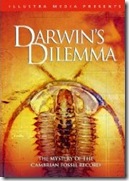
Darwin's Dilemma Casey Luskin of the Discovery Institute is all up in arms about censorship because, he claims, the Smithsonian-affiliated California Science Center cancelled its screening of the “documentary” Darwin’s Dilemma when it found out that the film was promoting intelligent design. While I agree that censorship is generally not good, Luskin seems to (again) misunderstand that a science center doesn’t want to promote unscientific ideas and that intelligent design is an unscientific idea. That’s been firmly established time and time and time and time again, but Luskin and his compatriots at the Discovery Institute can’t seem to wrap their heads around it.

Says Luskin…

As soon as word of the screening went public the Darwinian thought police started complaining about a government-supported science center renting its facilities to a group showing a film that challenges Darwinian evolution.

Why the outrage? Isn’t there academic freedom to express scientific viewpoints that dissent from the evolutionary “consensus”?

Yes, Luskin. There is academic freedom to express scientific viewpoints that dissent from the evolutionary consensus. The key word is “scientific,” however. Intelligent design is not scientific, no matter how badly you want it to be.

Luskin (and the film) attempt to use the Cambrian explosion as evidence for intelligent design, claiming that it poses a problem for evolutionary theory. I don’t want to ruin the ending, but… it doesn’t. Luskin, in true form, sets up a false dichotomy by saying that there are “two ways that modern evolutionists approach the Cambrian explosion” and lists them as follows.

A. Some freely acknowledge that the Cambrian fossil evidence essentially shows the opposite of what was expected under neo-Darwinian evolution.

B. Others deal with the Cambrian explosion by sweeping its problems under the rug and trying to change the subject.

Strangely enough, neither option is correct… or accurate… or honest. The Cambrian explosion is not a dilemma and the reason it’s not is that it hasn’t been swept under the rug, but has been openly (and repeatedly) addressed and shown to fit easily and neatly within the bounds of evolutionary theory. Evidently word hasn’t filtered down to Luskin yet.

The other concept that hasn’t reached Luskin yet is that even if science hasn’t discovered the answer for something yet, it doesn’t mean that simply asserting an “intelligent designer” is a valid answer. It’s certainly not even remotely scientific.

Luskin goes on to complain about “Darwinian elites” (envy much?), censorship, harassment, and Carl Sagan. His claims are nonsensical, including the one about a 2004 “pro-ID peer reviewed scientific article by Stephen Meyer (seriously?) and one about Richard Sternberg experiencing “retaliation” for being pro-ID (seriously?).

What it boils down to is the fact that Luskin just can’t accept the fact that intelligent design is not science… hence it shouldn’t be presented as science at science-based institutions. It’s not censorship any more than refusing to promote astrology as an alternative to astronomy is censorship.

Luskin’s closing paragraphs are where he glaringly makes my point that he just doesn’t get it.

Darwin’s dilemma isn’t just about a lack of transitional fossils in ancient rocks. It’s about how the guards of evolutionary orthodoxy will treat contrary scientific viewpoints.

Will they silence minority views, or will they grant dissenting scientists freedom of speech and scientific inquiry to make their case?

Evolutionary scientists welcome contrary scientific viewpoints. They actually debate the fine points of evolution constantly and review new scientific ideas. Dissention is welcomed, but the key word (again… and still) is “scientific.” That’s where Luskin and his Discovery Institute peers get left in the dust. They’re not scientific. Intelligent design is not science. As much as they want to believe it, saying it over and over again does not make it true and the more they do it, the more they make a mockery of themselves.

…which is something, it seems, they do on a regular basis.

Herding Cats and Situational Etiquette

In the atheist community, there are two sure things. The first is, of course, that atheists don’t believe in any gods. The other thing is that a lack of belief in any gods is pretty much the only universally common attribute of atheists. Atheist groups sometimes have trouble gaining or keeping members because, as the president of my local group, the Pennsylvania Nonbelievers, says, organizing atheists is like herding cats.

Because of this incredible variety in attitudes, outlooks, worldviews, political leanings, and philosophies, it’s no wonder that atheists don’t always agree on everything.

One point of disagreement is commonly at the forefront of atheist discussions… how to grow our community. How do we let other people know it’s okay to be an atheist? How do we get rid of the stigma associated with the term “atheist” and turn it into a positive? How do we go about criticizing religion, superstition, and pseudo-science without shooting ourselves in the foot?

In one case, there are outspoken, in-your-face atheists. They’ll wear “There is no god” t-shirts or accessories that proudly proclaim their atheism. They’ll bring up the topic constantly (sometimes in what some people consider inappropriate circumstances) and argue about it. They almost seem to be looking for a fight.

In other cases, there are proponents of science and critical thinking. They tend to focus more on education, whether it be astronomy, biology, or skepticism. They’re sometimes bold, but usually polite (but not always), and though they don’t shy away from outspoken criticism of archaic religious dogma, they tend to see atheism as the result of clear, rational, scientific thinking… not vice versa.

Other atheists tend to be quietly comfortable with their beliefs, and though they don’t go out of their way to bring them up, if questioned (or if the subject presents itself), they’ll happily (and amicably) discuss the matter, offering criticism where it’s due, but keeping a friendly tone and listening to the opposing views.

Of course, none of these are absolutes. People are combinations (or eclectic hodgepodges!) of these basic types and it’s probably rare to find someone who always fits in one single category.

I tend to be a combination of the science category and the friendly category. Why? I’m not an “in your face” kind of person. I’m friendly by nature and I like making people smile. I’m generally very good at gauging a situation to know what’s appropriate and what’s not appropriate, so the idea of wearing a t-shirt that proclaims “ATHEIST” to work or to a 4-H meeting or to anything other than an atheist gathering seems incredibly rude to me… in much the same way I would find it rude for someone to wear a t-shirt saying “CHRISTIAN” or “MUSLIM” or “Abortion is murder!” on it in those same situations. For me, it’s far more appropriate to wear a pro-science t-shirt… and I think that’s a much better starting point for a discussion.

However, if someone brings up the topic of religion or asks me about it, I have no qualms about discussing it, but I’m not out “looking for a fight” in order to tell someone they’re wrong and start “preaching the gospel” of atheism. To me, that seems silly and counterproductive. Many (most?) atheists dislike fundamentalist evangelism, especially the “in your face” kind, and if someone is just out looking to start a fight in order to “preach” about atheism, it strikes me as the same thing.

If someone says that the Earth is 6,000 years old, I’ll question them. If someone tells me that vaccinations cause autism, I’ll question them. If someone claims that religion is the only source of morality, I’ll question them. If someone tells me that this country is a Christian nation or that Obama is a fascist or that evolution isn’t true or that the moon landing was faked… I’ll question them. I’ll do what I can to educate people or at least provide them with pointers to get the information they need to make rational decisions.

What I’m not going to do is walk up to people and, out of the blue, say “I’m an atheist and if you believe in Christianity, you’re wrong.” To me, that’s sort of what a t-shirt proclaiming “ATHEIST” says. It’s a chip-on-the-shoulder dare to Christians or Muslims or Hindus. It won’t win friends. It won’t win converts. It won’t educate. It only aggravates.

…and I think that’s rude.

Obama and the Nobel Peace Prize

President Barack Obama - Nobel Peace Prize Winner(I don’t usually get all politicky on this site, but this was something I felt very strongly about and since a huge percentage of Obama’s critics seem to be irrational, right-wing fundamentalists, it’s somewhat (though not entirely) relevant to this blog.)

Since President Obama won the Nobel Peace Prize, there’s been a firestorm of criticism with some people even implying that Obama himself somehow used subversive tactics to gain the award… that he used manipulative tricks that somehow succeeded in conning the Nobel committee into giving him the prize.

I’ve yet to hear someone from the right give any sort of acknowledgement that it’s rather nice that the president of our country won the award. Not only will they not even show a snippet of national pride in the matter, but they rail against Obama, crying that he’s done nothing to deserve it… that he’s accomplished nothing noteworthy in his term as president (or in his life)… that the award is now cheapened.

Despite explanations by the Nobel prize committee as to the reasons for their selection, Obama’s opponents continue to see nothing but their own imaginary country-destroying conspiracies, socialist takeovers, irresponsible policies, and egomaniacal rantings of our president and of anyone who happens to come down one step to the left of nut jobs like Rush Limbaugh and Glenn Beck. It’s as though they’re so blinded by their frothing hatred for our president, they can’t even acknowledge that the man has some good points… that he does want this country to succeed and to be safer and to be respected around the world… and that he’s working to accomplish that goal.

I can’t say that I agree with everything Obama has done (or rather that the Congress has done), but I do see some glaring goodness from the man. When I voted for him, there were checks in both the pro and con columns, but the things in the “pro” column outweighed the others. National security was in the “pro” column. After the Bush era, I feel that our country was far less safe than before, but in one year in office, I feel that Obama has changed that. Even as early as July, international opinions of the United States were almost back to their pre-Bush levels. Friday, I read an international poll showing the numbers even higher than in July, exceptionally so among Western European nations.

The right-wing of this country will poo-poo those statistics and complain that the country is much less safe and say that Obama has done nothing but lie and collect an unwarranted paycheck. The not-so-thin veil of partisan hatred obscures their vision so much that they refuse to acknowledge, or even see, even small positives about our president.

Obama’s winning the Nobel Peace Prize should be a cause for celebration… an inspiration… a reason to be proud. The Nobel committee explained their position well and an award of this nature is not unprecedented as some would claim. But instead of savoring the pride, the honor, and the inspiration that should come from a Nobel prize, Obama’s opponents, not Obama, cheapen the award. Their wild spewing of vitriolic anger tarnishes the luster of a prestigious, honorable prize that was awarded to a man chosen by the Nobel committee for both his accomplishments and for the promise of what he, and the rest of us, can yet accomplish toward global peace.

Rachel Maddow has more to say.

httpv://www.youtube.com/watch?v=GMJuEOaF84o

(thanks to my friend Rob Kent for the link to Rachel’s video)

Happy Birthday… or Anniversary?

Today marks one year since Craig and I first started Rationality Now with a post linking to a debate between Christopher Hitchens and Rabbi Shmuley Boteach. Since then we’ve grown in both knowledge and readership and I wanted to sincerely thank all of our current and former readers who have helped make this past year of blogging a great experience.

As if they actually knew, a Jehovah’s Witness showed up at my front doorstep around 9:30 am. My wife answered the door because I was sleeping in so I missed the opportunity to chat with him. It’s actually the first time in my almost fourteen years of living here that someone has stopped by while I was at home… and I missed it.

I’m pretty sure he was going to say Happy Birthday… or Happy Anniversary.

Which is it, anyway?

Mogahed says Sharia Law is misunderstood

Dalia Mogahed, President Obama’s adviser on Muslim affairs, seems to think that the West misunderstands Sharia law… and the reason that so many women do support Sharia is because…

The majority of women around the world associate gender justice, or justice for women, with sharia compliance.

The portrayal of Sharia has been oversimplified in many cases.

Okay… I know this woman’s job is to be a sort of arbiter between the Muslim world and the United States, so she can’t just come out and say (to their faces) that Sharia law is a horribly primitive, misogynous, brutal, absurd, and unethical legal framework. But to simply say that its been oversimplified and misunderstood and imply that it has anything even remotely like “justice for women” is patently absurd.

I do understand that perhaps there’s an underlying strategy here. Making peace with Muslims isn’t going to come from telling them that their rules for living are barbarous. Some “calming down” will, perhaps, be helpful in beginning the process of enlightenment. In addition, the London show was hosted by a group called Ibtihal Bsis, a member of the extremist Hizb ut Tahrir party, according to this article from the Telegraph. According to the article…

The group believes in the non-violent destruction of Western democracy and the creation of an Islamic state under Sharia Law across the world.

That’s a tough position for Mogahed. She was placed in the middle of the group which promotes horrid, horrid things, yet she’s supposed to be leading the charge for harmony between religions.

Again from the article…

During the 45-minute discussion, on the Islam Channel programme Muslimah Dilemma earlier this week, the two members of the group made repeated attacks on secular “man-made law” and the West’s “lethal cocktail of liberty and capitalism”.

They called for Sharia Law to be “the source of legislation” and said that women should not be “permitted to hold a position of leadership in government”.

This is not an acceptable position in a civilized world. Whether it’s a common view among moderate Muslims, I can’t say, but the fact that it’s proposed by any faction of Muslims is abhorrent.

Miss Mogahed made no challenge to these demands and said that “promiscuity” and the “breakdown of traditional values” were what Muslims admired least about the West.

Though I can somewhat sympathize with Mogahed not taking them to task for their primitive views, I don’t sympathize with the ignorance of using the phrase “breakdown of traditional values” in reference to shortcomings of the United States. It’s notoriously vague and can bet twisted to mean just about anything, but frequently is seized upon by the somewhat similarly archaic religious right to mean same-sex marriage and abortion. Perhaps Mogahed wanted to be vague, however, in order to leave herself some wiggle room in future discussions. I’m giving her a huge benefit of the doubt by saying that.

Christians really have no room to complain in this scenario, in my opinion, without giving equal time to criticizing their own religion. Both Christianity and Islam promote some savage, inhuman ideas and actions. I would agree that Islam generally takes a harder line against women and is less tolerant of opposing views, but that’s not any kind of exoneration of Christianity. It’s not okay to do bad things just because someone else does worse things. The recent defense of Catholic sexual scandals by the Vatican saying that Protestents do it, too, is a perfect example.

Islam needs to be illuminated by the bright light of skepticism and reason… and a secular sense of ethics and morality. The positions it takes on women alone are enough to condemn it to the ideological junk heap, but of course that won’t happen because it’s “protected” under the grand umbrella of “religious tolerance” that protects so many abhorrent religious ideas. I fully support religious freedom, but there’s a line that needs to be drawn when it comes to the poor treatment of fellow human beings and the promotion of superstitious nonsense.

Islam crosses that line by leaps and bounds.

Dr. Joe Albietz on Vaccination

Dr. Joe Albietz is a pediatrician who is among the people who outspokenly refute the anti-vaxxers of the world (like Jenny McCarthy). This is his talk from TAM 7 about vaccinations and what they’ve done for humanity. It’s worth a viewing. As Phil Plait says about the video…

If you think vaccines are an evil conspiracy, are designed to make us sick, are filled with toxins, are a bad thing, then spend 6 minutes and 53 seconds educating yourself.

Because you’re wrong.

Here’s the video.

httpv://www.youtube.com/watch?v=eFVE8csrcRw

AAI Convention – Impressions

Craig and I returned from the Atheist Alliance International Convention in LA last night and I’m struggling to get back into the groove of my East Coast time zone. I wanted to post my impressions of the convention, including my highlights and disappointments.

Overall, I’d have to say that I loved the entire event. There were some technical issues every now and then and a bit of disorganization here and there, but it didn’t detract from my experience at all. Almost without exception, the people I encountered were friendly, warm, polite, and fun-loving. There were smiles everywhere I looked. The event was also nearly devoid of religion-bashing, which was a delightful surprise. There were some expected jabs at creationists from some speakers (where appropriate), but that was about the extent of it.

The event was positive, informative, and socially delightful. We were privileged to have lunch and dinner with Margaret Downey, who was a pure delight. I sat next to a wonderful couple from Vancouver (whose names escape me, sadly) at dinner and we had great conversations about religion, politics, and philosophy. At the Sunday night social, I had an exuberantly fun time with Richard Haynes (of Atheist Nexus), Sean Faircloth, Trevor (not Victor), and Carla the veterinarian who delighted in explaining the intricacies of various castration techniques (OMG I hope I got her name right). Topics ranged from zombies to Hello Kitty to health care to the aforementioned castrations (which seemed to come up far too often, with hilarious results). It was wonderful.

I don’t think I’ve ever been to a conference before (professional or personal) with that many openly friendly people.

As for the speakers and events, here’s a summary of my experience.

Friday

Friday was the opening day and after a live podcast for Dogma Free America (which covered current events and was quite entertaining), almost all the presentations were paralleled by two others, so it was tough to choose between the speakers (the program wasn’t always clear about the topics).

My first choice was a good one and I listened to Stephen Frederick Uhl, an ex Catholic priest and author of Out of God’s Closet, speak about ethics and morality without religion. I enjoyed his talk immensely and found much of what he had to say paralleled some of my own ideas about ethical/moral guidelines… only he explained things better and in more detail.

I wasn’t as fortunate for my second and third picks of Sunsara Taylor and Maurice Bisheff. Taylor spoke about abortion, but was way too radical in her views for my tastes… and for the tastes of most others in the room, based on the comments and questions she received. Bisheff spoke about Thomas Paine, but his presentation was terribly dry and seemed to promote Paine’s deistic views which, according to this talk, approached the level of metaphysical woo.

Friday night there was a live screening of Real Time with Bill Maher (with Richard Dawkins as guest) after which we got a hilarious presentation by Brian Dalton (of Mr. Deity fame) along with the entire cast of his show who did some of the sketches on stage. Near the end of his presentation, Richard Dawkins and Bill Maher arrived and Maher was awarded with the Richard Dawkins award for his movie Religulous. Maher then delighted the crowd with some great comedy, including a reading from Rick Warren’s The Purpose Driven Life (you can see a clip on YouTube of that bit).

After the main convention hall events, there was a comedy fundraiser for AAI with some very, very funny comedians.

Saturday

Saturday was science day and all the speakers were directly sponsored by the Dawkins Foundation for Reason and Science. Every talk I attended was brilliant and informative and inspiring. Some of these talks will be covered in more detail by Craig or me in separate posts, but here’s a summary.

  • J. Anderson Thomson, an evolutionary psychologist, spoke about the evolutionary foundation for morality and the studies that are being done about the brain and how it process moral decisions.
  • Lawrence Krauss, a physicist (and author of The Physics of Star Trek), spoke about the universe, its expansion, its origins, and its future… and made physics not only interesting and entertaining, but incredibly funny.
  • Carolyn Porco, a planetary scientist and the leader of the imaging team for the Cassini project, spoke about Cassini and showed some remarkable images of Saturn, including this one, Saturn eclipsing the Sun and with Earth as a small dot just above the left side of Saturn’s rings.
  • A biologist (whose name I don’t have at the moment) gave an amazing talk about stem cell research and what’s been accomplished so far, what being worked on currently, and what the future holds. His did a great job of making it all understandable to laymen.
  • Jerry Coyne, an evolutionary biologist and author of Why Evolution is True, spoke about the evidence for evolution in various fields. His talk was probably my favorite of the convention, since it’s one of my favorite topics (and favorite books) and he was a very entertaining speaker.
  • Daniel Dennett, philosopher and author of Breaking the Spell, spoke about the “Evolution of Confusion,” the interviews he’s doing with atheist clergy, and the fluff language of some theologians (like Karen Armstrong, as Jerry Coyne reminded me) who say things like “God is the God behind God.”
  • Richard Dawkins was the keynote speaker after the dinner banquet and, being on a book tour, read from the final chapter of his new book about the evidence for evolution titled The Greatest Show on Earth.

Saturday evening, there was a live music party hosted by Atheist Nexus. I was completely bushed at this point and didn’t stay around for much of it… and had a Sunday breakfast scheduled for 7:00 am with the board members of Atheist Alliance International.

Sunday

I had breakfast with Stephen Uhl (mentioned earlier) and Stuart Beckman, the current president of AAI. We gave Beckman some feedback about the convention and had some great conversations about building support in the atheist/skeptic/free-thinking community and getting rid of the stigma society attaches to atheism.

There were two headline speakers after breakfast.

  • Jonathan Kirsch, religious historian and author of The Grand Inquisitor’s Manual, spoke about the Inqusition, its origins, its methods, and how they have been used over the centuries… even up to the current day. It was a fascinating talk and he was an entertaining speaker.
  • Eugenie C. Scott, executive director of the National Center for Science Education and author of Creationism vs. Evolution: An Introduction, spoke about the verbal and legal tricks that creationists use in their attempts to insinuate creationism (or intelligent design… same thing) into our schools’ science curriculums. She was warm and funny and it’s reassuring to know that she and her staff are on top of the issue.
  • Sadly, Richard Haynes, the founder of Atheist Nexus, was moved to after the closing ceremonies, so only a small crowd got to hear his talk about his story, starting Atheist Nexus, and how to help build the atheist community.  He was very friendly, humorous, and relaxed and made a great presentation. It would be great to have him as a headliner at the next convention.

Sunday night there was an informal social at the hotel bar from 7:00 to midnight for those folks who were staying over until Monday. I got there a bit early, doing some writing and drinking Diet Coke, until folks started to arrive… and then it was a phenomenal evening of hilarity, as I mentioned at the start of this post.

Overall, this was a terrific event. The minor glitches and snippets of disorganization didn’t phase me and the speakers were informative and inspirational. What really made the event special, however, was the sense of camaraderie, friendship, and warmth that was exuded by the attendees. For folks that are frequently labeled with all kinds of derogatory terms (hateful, angry, rebellious, etc), they certainly blew away that stereotype and made the convention center into a place that felt welcoming and comfortable… even for non-atheists (of which there were a few).

I’d definitely go again.